Why Canadian Businesses Are Adopting Service Robots
What service robots actually do in Canadian buildings today, the benefits businesses look for, the limits to plan around, and why local support decides long-term success.

Businesses across Canada, from offices and shopping centres in Toronto and the Greater Toronto Area to hospitals, hotels, warehouses and restaurants across Ontario and beyond, are adopting service robots to handle repetitive, scheduled work such as floor cleaning, indoor delivery and parts of food and beverage preparation. The goal is not to replace teams but to make routine tasks consistent and measurable, so people can spend more time on work that needs judgement and a human touch.
This article explains which jobs service robots handle today, the benefits organizations typically look for, the limitations to plan around, and why local deployment and support make the difference between a pilot and a lasting program.
What is a service robot?
A service robot is an autonomous or semi-autonomous machine that performs a practical task in a commercial or public building rather than on a factory production line. In Canadian facilities the most common categories are:
- Cleaning robots that scrub, sweep, vacuum or dust-mop hard floors and carpets on a schedule.
- Delivery robots that carry food, linens, supplies or parcels between points in restaurants, hotels, hospitals and offices.
- Multi-floor and industrial transport robots that ride elevators, pass gates or move materials between workstations.
- Kitchen and beverage robots that automate repeatable cooking steps or drink dispensing.
Most use a combination of LiDAR, cameras and other sensors to map a space, follow routes and avoid people and obstacles. Many connect to apps or cloud platforms that show task status and cleaning or delivery history.
Which tasks do service robots handle in Canadian buildings?
Floor cleaning
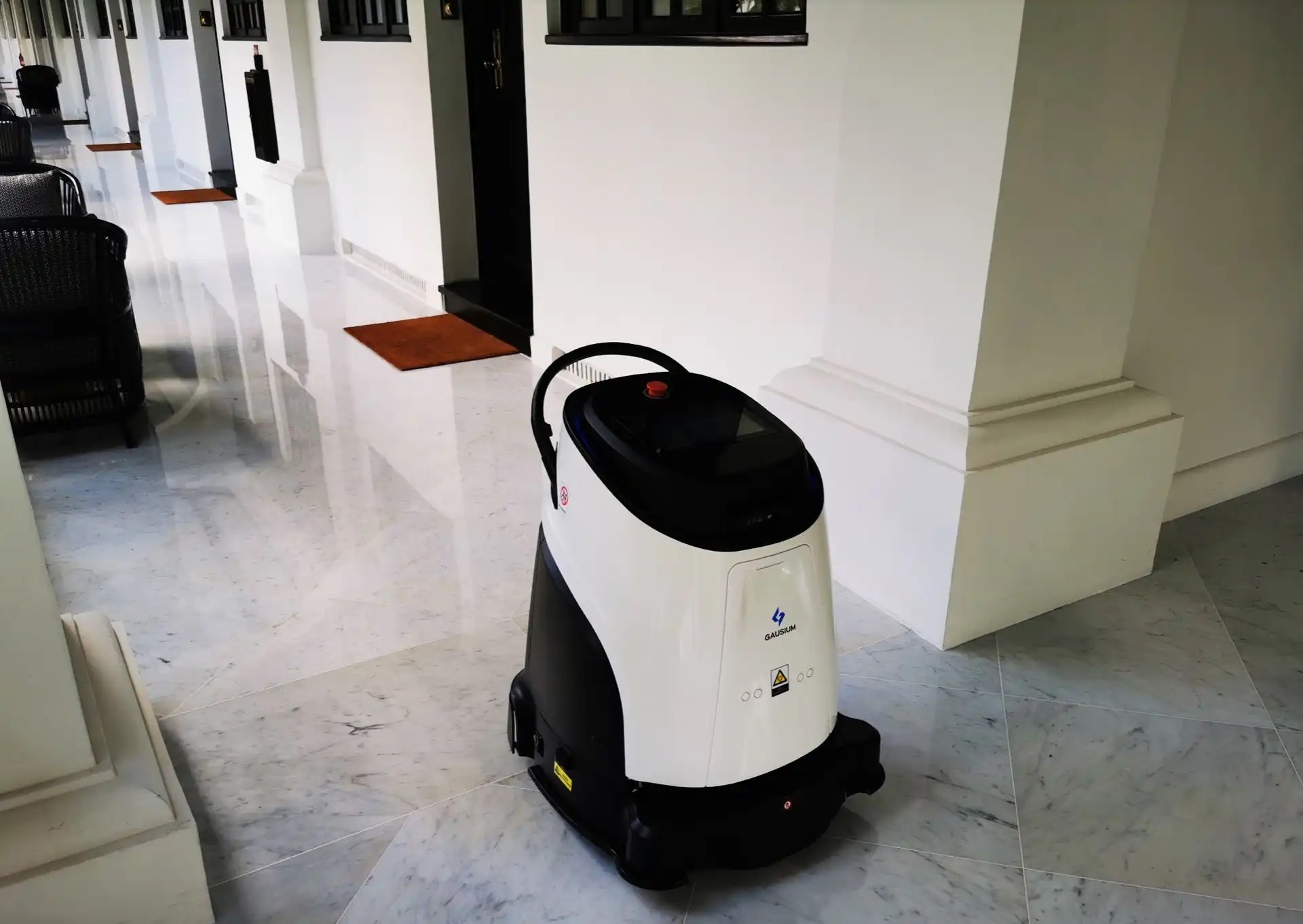
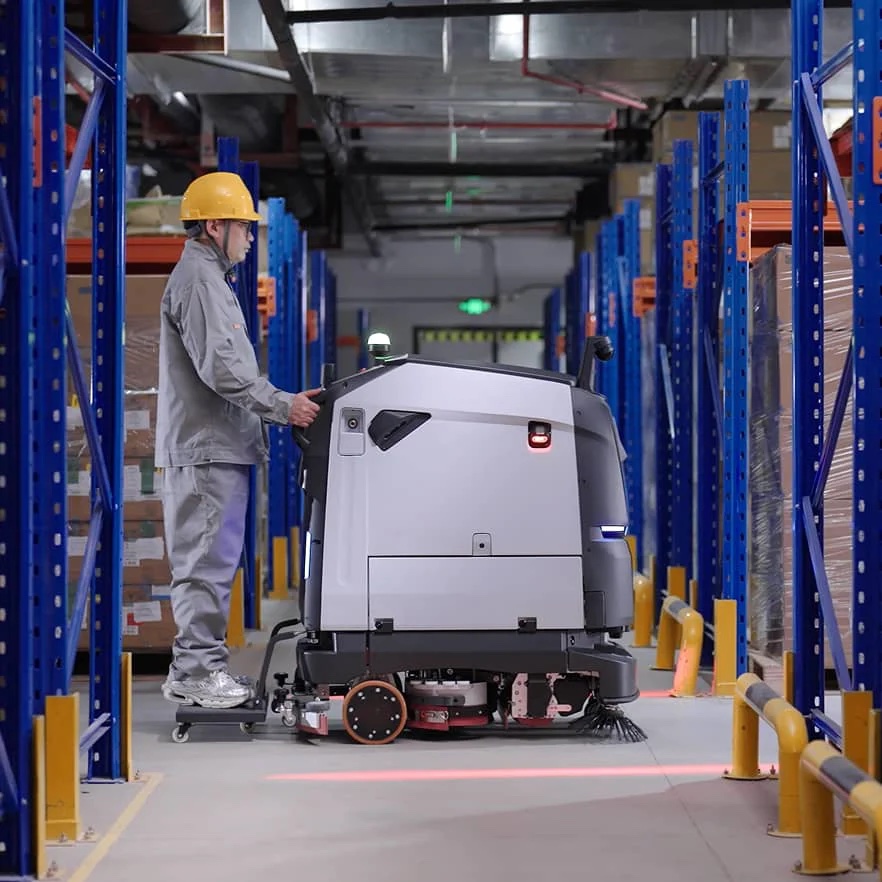
Floor care is the most common starting point because it is repetitive, happens every day and covers large areas. Robots range from compact 4-in-1 machines such as the Gausium Phantas and PUDU CC1 Pro for offices, schools and retail, to large scrubber-dryers such as the Gausium Scrubber 75 and PUDU BG1 Series for warehouses, transit hubs and shopping centres. Dedicated vacuum robots like the Gausium Vacuum 40 handle carpeted corridors and lobbies, and sweepers such as the PUDU MT1 pick up debris across large indoor or semi-outdoor spaces.
Indoor delivery
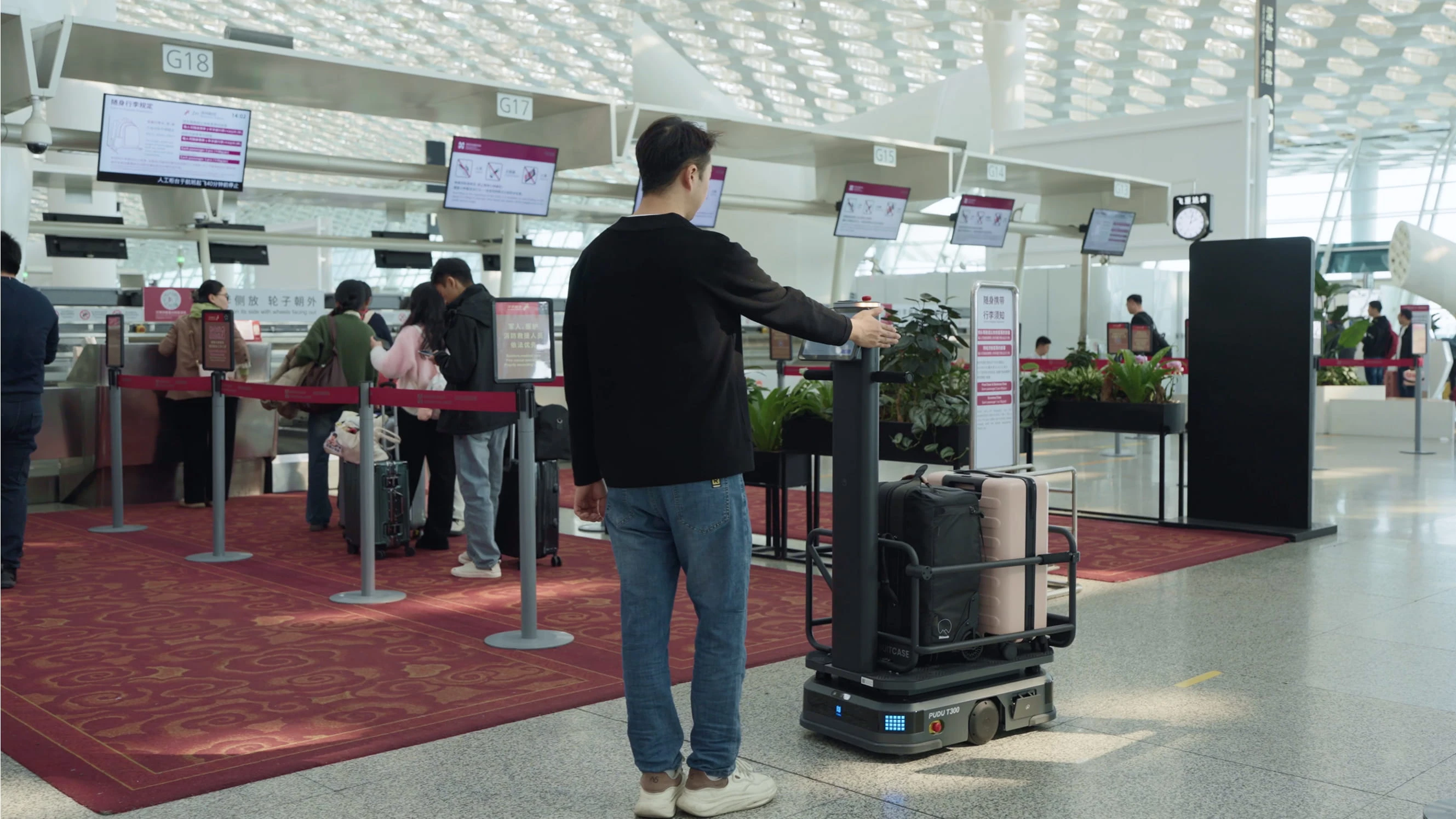
In restaurants, robots such as PUDU BellaBot and KettyBot Pro carry dishes from the kitchen to tables and bring empties back. In hotels, hospitals and office towers, enclosed robots such as PUDU FlashBot Max deliver items between floors, and in factories the PUDU T300 moves materials between stations.
Kitchen and beverage preparation
Automated cooking robots such as the UTCOOK Chef G2 and Chef G3U and G3 Lite run programmed stir-fry recipes, and beverage systems such as the Zeeway Model K dispense measured ingredients for tea and juice drinks. These suit menus with high volumes of repeatable dishes or drinks.
Why are businesses adopting robots now?
Several practical pressures push organizations in Toronto and across Canada to look at automation. The reasons below are described qualitatively; the right weighting depends on each site.
Consistency
A robot follows the same route and settings every time. For floor care this means the whole mapped area is covered on schedule, including spaces that are easy to skip at the end of a long shift. For delivery it means predictable trips between fixed points.
Redeploying staff to higher-value work
When a robot takes over long, repetitive passes across open floors or back-and-forth runs to the kitchen, staff can focus on detail cleaning, washrooms, guest service, patient care or inspections. In practice most organizations use robots to stretch existing teams rather than reduce them.
Hard-to-staff shifts and extended hours
Many robots support scheduled tasks and automatic docking or charging, and several cleaning models can work with stations that refill and drain water. That makes it easier to cover overnight or early-morning windows when buildings are quiet.
Safety
Robots are designed to detect and avoid people and obstacles, and several models add lights or sounds to signal their movement. Moving repetitive pushing, lifting and carrying to robots can also reduce strain on staff.
Data and reporting
Many robots record what they did: area cleaned, time taken, routes completed or deliveries made. For facility managers this creates a record that can support service-level reporting to tenants or head office, something that is difficult to capture with manual work alone.
What don't robots replace?
Service robots are tools for specific, repeatable tasks. They do not replace:
- Detail and spot work such as washrooms, stairs, high surfaces and tight corners that a machine cannot reach.
- Judgement about spills, damage, hazards or unusual situations that need a person to decide.
- Human interaction with guests, patients, residents and customers.
- Preparation such as clearing clutter, opening doors that are not integrated, and emptying or refilling where no station is installed.
Planning with these limits in mind keeps expectations realistic and helps teams see robots as support rather than a threat.
What limitations should businesses plan for?
- Site readiness: floor types, thresholds, ramps, elevator access, Wi-Fi or cellular coverage and space for docking or water stations all affect which robot fits.
- Integration: robots that ride elevators or pass gates need those systems connected, which involves building management and sometimes the elevator provider.
- Change management: staff need training and a clear explanation of how the robot changes their day.
- Maintenance: brushes, squeegees, filters and batteries are consumables, and robots need occasional servicing like any other equipment.
Why does local deployment and support matter in Canada?
Canada is large, and many buildings are far from a manufacturer's head office. A robot that sits idle waiting for a part or a technician stops delivering value. That is why the "last mile" of robotics, meaning mapping, integration, training, maintenance and repairs, matters as much as the hardware.
SPARC Technologies is the official Gausium and Pudu distributor in Canada, with more than 1,000 deployments across over 35 industries. Locally based teams in the Greater Toronto Area, Montreal, Ottawa, St. John's, British Columbia, Calgary, Edmonton, Saskatoon and Regina handle deployment and service, backed by 24-hour online assistance, a guaranteed 48-hour on-site response, an in-house engineering team and an inventory of genuine spare parts. SPARC was named the 2025 Top Autonomous Robotics Solution in Canada.
How should a business get started?
- Pick one task and one site where the work is repetitive and the result is easy to see.
- Define what success looks like, for example consistent nightly coverage of a lobby or fewer kitchen-to-table trips for servers.
- Have the site surveyed for floors, routes, connectivity and docking space.
- Run a pilot, involve the people who work alongside the robot, and review the robot's reports.
- Scale to more areas or sites once the routine is proven.
For a structured approach, see the commercial robot deployment checklist, explore cleaning robots and delivery robots, or speak with the SPARC consulting team.