Delivery Robots in Canada: How Businesses Use Them and Which One to Choose
Where Canadian businesses use delivery robots, which Pudu model fits which job, and what deployment and local support look like.
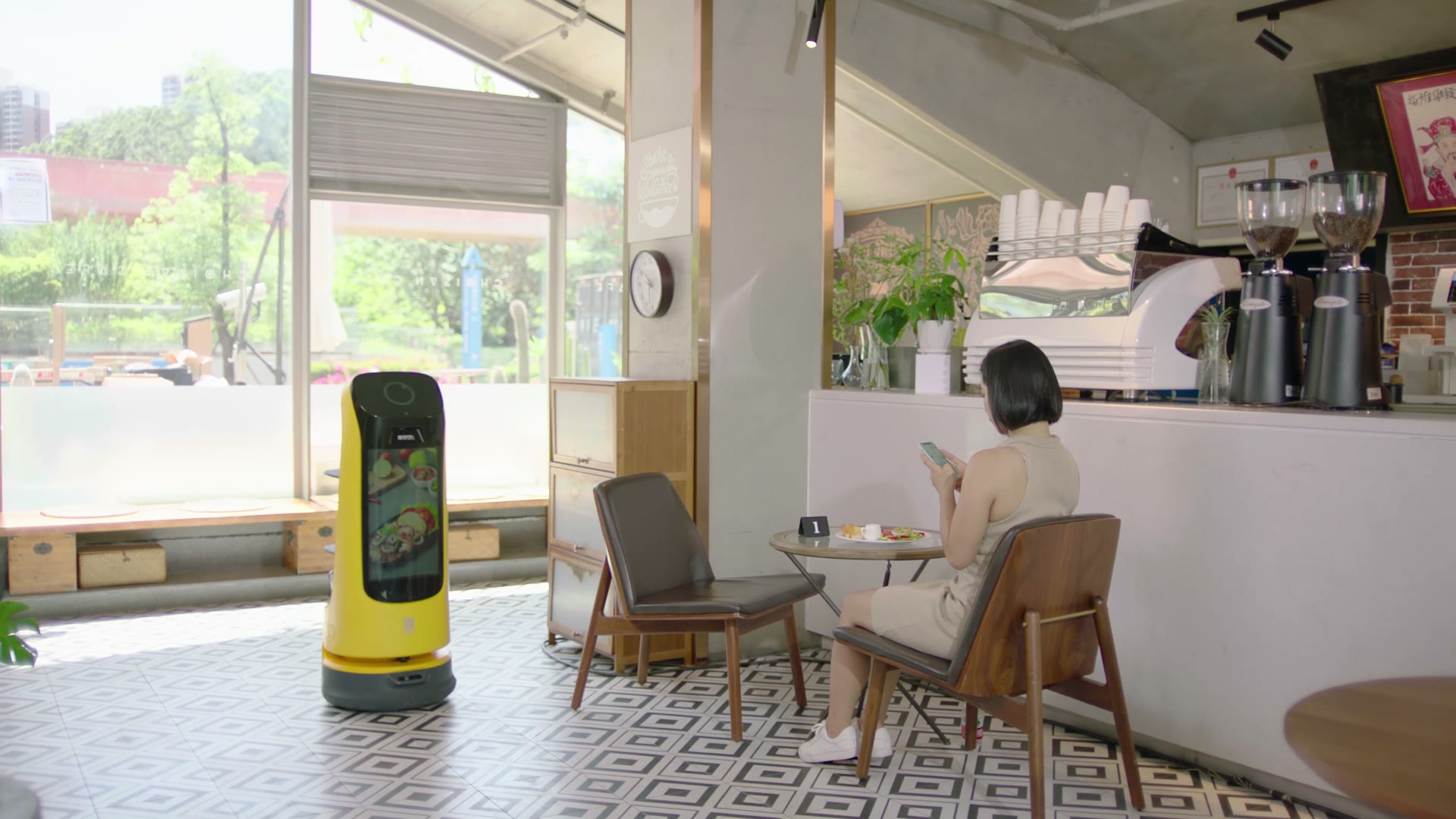
Delivery robots in Canada are autonomous service robots that carry food, supplies and parcels between fixed points so staff can stay with guests, patients and customers. Restaurants in Toronto, hotels in Montreal, hospitals in Ottawa and factories in Calgary use them for the same reason: the walking between the kitchen, the front desk, the storeroom and the floor is repetitive work that a robot can do all day. SPARC Technologies is the official Pudu distributor in Canada, and this guide explains which Pudu delivery robot fits which job and what it takes to put one to work.
What do delivery robots actually do?
A delivery robot follows a mapped route through your building, stops at a table, room, ward or workstation, and waits for someone to take the load before returning. Most models also handle related jobs:
- Food running and dish return in restaurants, cafeterias and banquet halls.
- Guest greeting and escorting, where the robot leads a party to its table.
- Room service and amenity delivery in hotels, including trips by elevator.
- Medical supply runs between pharmacy, storage and wards, without contact.
- Material transport between production lines and warehouse stations.
- In-store promotion on a built-in advertising screen while the robot works.
Across our 1,000+ deployments in 35+ industries, the common thread is the same: people stop carrying things and spend that time on service.
Where are delivery robots used in Canada?
Restaurants and food service
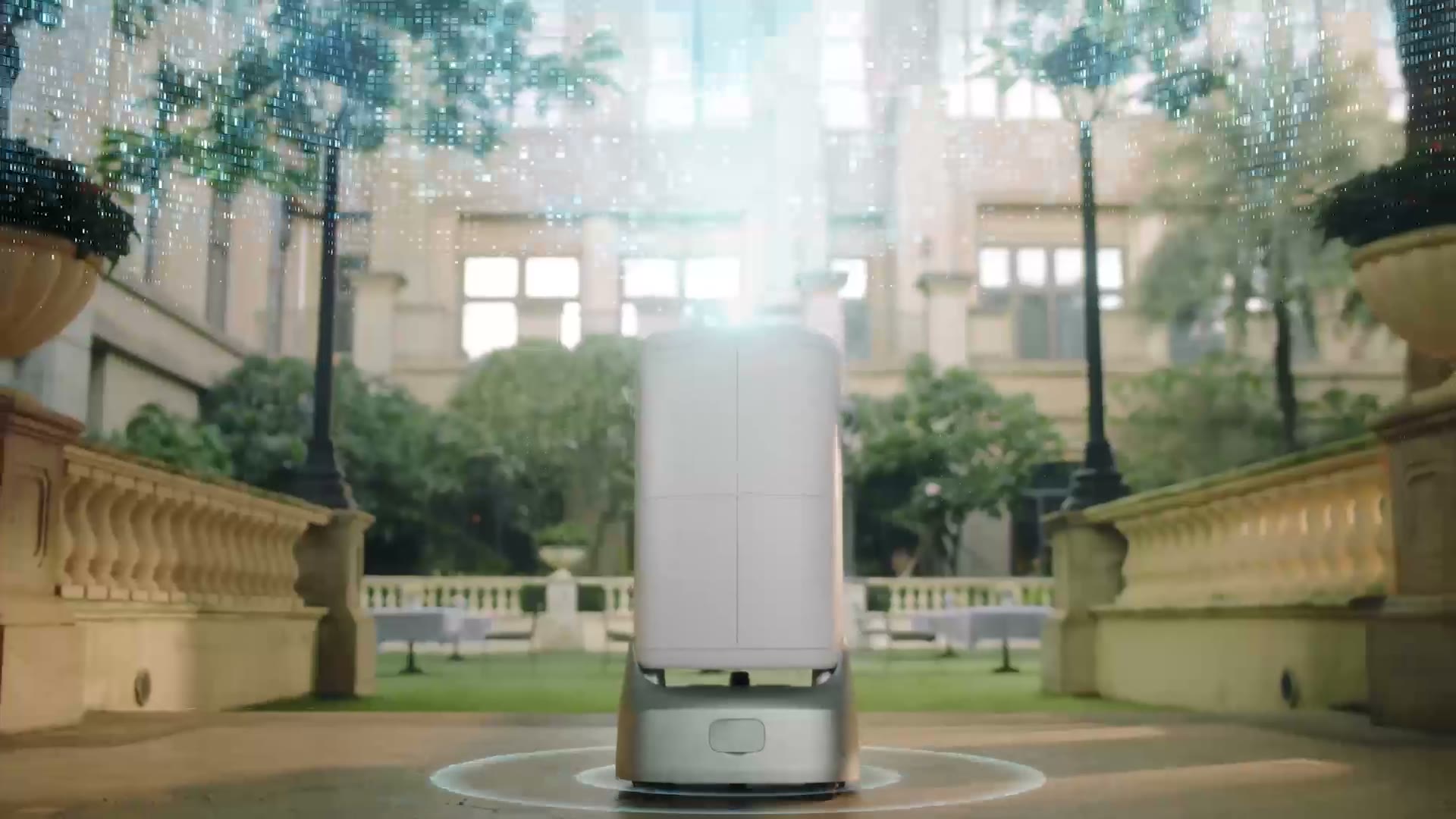
Restaurants are the most common first deployment. A robot like PUDU BellaBot carries up to four trays from the pass to the table, so servers can take orders and check on guests instead of walking back and forth. KettyBot Pro adds greeting, escorting and an 18.5-inch advertising display, which suits busy family restaurants, food courts and retail counters.
Hotels and resorts
Hotels need enclosed, lockable compartments and the ability to ride elevators. PUDU FlashBot Max is built for exactly that: room service, amenity drops and semi-open areas such as garden corridors, fitness zones and poolsides. Read our guide to multi-floor delivery robots and elevators for how that works.
Hospitals, clinics and senior residences
PUDU HolaBot was designed for food and medical delivery. It has a 60 kg carrying capacity, a 120 L volume, contactless "Air Motion" controls and an optional pager so nursing or kitchen staff can call it to where it is needed.
Offices, retail and entertainment venues
PuduBot 2 is a versatile, all-round delivery robot for restaurants, offices, retail, entertainment venues, manufacturing sites and hospitals. It supports mapping in extra-large scenes up to 40,000 m² and ceilings up to 30 m, which makes it a good fit for big open venues.
Factories and warehouses
For heavy loads, PUDU T300 carries up to 300 kg between stations, follows a lead robot or works with shelf, lifting and towing attachments. It is designed to meet ISO 3691-4 safety requirements for industrial trucks.
Which Pudu delivery robot is right for your business?
The table below compares published specifications from Pudu. Use it as a starting point; the right choice depends on your floor plan, aisle widths, load and how many trips you make per hour.
| Robot | Best suited to | Load | Run-time | Charging time | Path clearance |
|---|---|---|---|---|---|
| BellaBot | Restaurants, cafés, hotels | Max. 40 kg (10 kg/tray) | 13 h (no load) | 4.5 h | 70 cm |
| BellaBot Pro | Restaurants and retail that want advertising | 40 kg (10 kg/tray) | 11 h (no load) | 4.5 h | 65 cm |
| KettyBot Pro | Greeting, escorting and delivery in tight spaces | 10 kg/layer | 9 h (no load) | 3.5 h | ≥52 cm |
| PuduBot 2 | Large venues, offices, retail, hospitals | 40 kg | 12 h (no load) | 4 h | 80 cm path width |
| HolaBot | High-volume restaurants and hospitals | 15 kg per shelf, 60 kg total | 12 h (no load) | 4.5 h | Not published |
| FlashBot Max | Hotels and multi-floor buildings | 10 kg/layer, 2–4 compartments | 9 h | 4 h | 60 cm |
| T300 | Factories and warehouses | 300 kg | 12 h (no load), 8 h (full load) | 2 h (0% to 90%) | ≥60 cm (Standard) |
A few rules of thumb we use when helping customers choose:
- Narrow aisles? Measure your tightest passage first. KettyBot Pro can pass 52 cm aisles in certain situations; FlashBot Max and T300 need about 60 cm.
- Need to promote while you deliver? BellaBot Pro and KettyBot Pro both carry an 18.5-inch advertising screen.
- Multiple floors? FlashBot Max and T300 support elevator access; plan elevator integration early.
- Heavy or bulky loads? T300 for material handling; HolaBot when you need large, detachable trays.
How do delivery robots navigate safely around people?
Pudu delivery robots combine LiDAR and visual SLAM (VSLAM) to know where they are and plan a route. BellaBot uses three RGBD cameras plus LiDAR to avoid low-lying and overhanging obstacles and can stop in as little as 0.5 seconds. BellaBot Pro adds two forward-facing cameras, three RGBD sensors and a radar, and projects ground patterns at intersections to alert pedestrians. Pudu's VSLAM+ technology is marker-less; for PuduBot 2, Pudu lists 75% less deployment time.
Robots also call for help in practical ways. Depending on the model, staff can summon them with the PUDU Link app, push-button callers, 4G watches or pagers.
What does deploying a delivery robot with SPARC look like?
A successful deployment is mostly about preparation and support, not the robot itself. Our process with Canadian customers usually follows these steps:
- Site walk-through. We look at routes, aisle widths, floor surfaces, thresholds, Wi-Fi coverage and where the robot will charge.
- Model selection. We match the robot to your loads, layout and goals, and advise on accessories such as enclosed covers or pagers.
- Mapping and setup. Our engineers map the space, set delivery points and configure modes such as delivery, cruise, birthday or dish return.
- Staff training. Teams learn how to load, send, call and charge the robot so it becomes part of the shift, not a novelty.
- Ongoing support. SPARC provides 24-hour online assistance, a guaranteed 48-hour on-site response, an in-house engineering team and genuine spare parts.
Because SPARC has locally based teams in the Greater Toronto Area, Montreal, Ottawa, Calgary, Edmonton, Saskatoon, Regina, St. John's and British Columbia, support comes from people who can actually visit your site.
Is a delivery robot worth it for a Canadian business?
The value of a delivery robot depends on how many trips your staff make today, how far they walk, and what they could do with that time instead. Busy restaurants usually see the benefit in table turnover and server workload; hotels in after-hours room service; hospitals in fewer non-clinical trips for nurses; factories in steadier material flow between stations. Cost drivers include the model, accessories, number of floors and any elevator or gate integration. The best way to get a clear answer is a short site assessment.
SPARC was named Top Autonomous Robotics Solution in Canada (2025) and received Pudu's Excellent Service Performance Partner award in 2024. If you are evaluating delivery robots for a restaurant, hotel, hospital or warehouse anywhere in Canada, talk to our team or explore our full range of delivery robots.