Restaurant Robots in Canada: Cooking, Beverage and Delivery Robots Explained
What automated wok robots, bubble tea dispensers and delivery robots do in Canadian restaurants, and what to check before you buy.

Restaurants in Canada are using robots in two places: in the kitchen, where automated wok and beverage robots cook and dispense to an exact program, and in the dining room, where delivery robots run food and bus dishes. The kitchen robots deliver consistency and let one person run several stations; the front-of-house robots give servers back the walking time so they can spend it with guests.
This guide covers the robots SPARC Technologies supplies to restaurants in Toronto, the Greater Toronto Area and across Canada, what each one does, and what to check before you buy.
What can a cooking robot do in a restaurant kitchen?
Automated stir-fry robots handle the full cooking cycle for wok dishes: dispensing ingredients and seasonings, stir-frying at high heat, serving and cleaning the wok. Staff load ingredients and choose the recipe; the robot does the rest the same way every time.
UTCOOK Chef G2 (G2U)
The UTCOOK Chef G2 is an automatic stir fryer with 7 kW of power and an authentic iron wok. It runs six automatic steps: ingredient dispensing, stir-frying, seasoning from a series of 10 seasonings, temperature control up to 300 degrees, dish serving and high-pressure pot cleaning. Its specs list a 273 mm (11 in) non-coated iron pot, a maximum cooking capacity of 1.5 kg (3.3 lb), 240 V rated voltage and a footprint of 700 × 940 mm. UTCOOK's cloud library offers over 1,000 recipes with one-click replication, and one operator can run multiple units.
UTCOOK Chef G3U and Chef G3 Lite
For higher volumes, the UTCOOK Chef G3U and G3 Lite step up to 12 kW rated power, a 350 mm (14 in) uncoated iron wok and a maximum cooking capacity of 4 kg (8 lb). High-frequency induction heating reaches 200°C at the wok centre in 20 seconds. Six high-precision metering pumps dispense oils, sauces, water and powders, and an IR temperature sensor and load cell adjust heat and agitation in real time. The two models differ in rated voltage (207 V for the G3U, 208 V for the G3 Lite, both three-phase) and overall dimensions.
How do bubble tea and beverage robots work?
An automated beverage dispenser stores tea, syrups, milk and juices in refrigerated lines and dispenses each ingredient by program. The Zeeway Model K is a vertical intelligent beverage dispenser built for stores with high automation requirements:
- 17 automatic discharge types (customizable), including tea, syrup, milk, juice and thick fruit puree
- Accuracy calibration of ±1–3 ml and a discharge speed of 5–8 seconds
- Full pipeline refrigeration, keeping liquids below 8°C
- Discharge by QR code scanning and one-button CIP cleaning at the end of the day
- A footprint of only 0.4 square metres (660 × 540 × 1550 mm), so it fits at checkout or in the kitchen
Which robots help in the dining room?
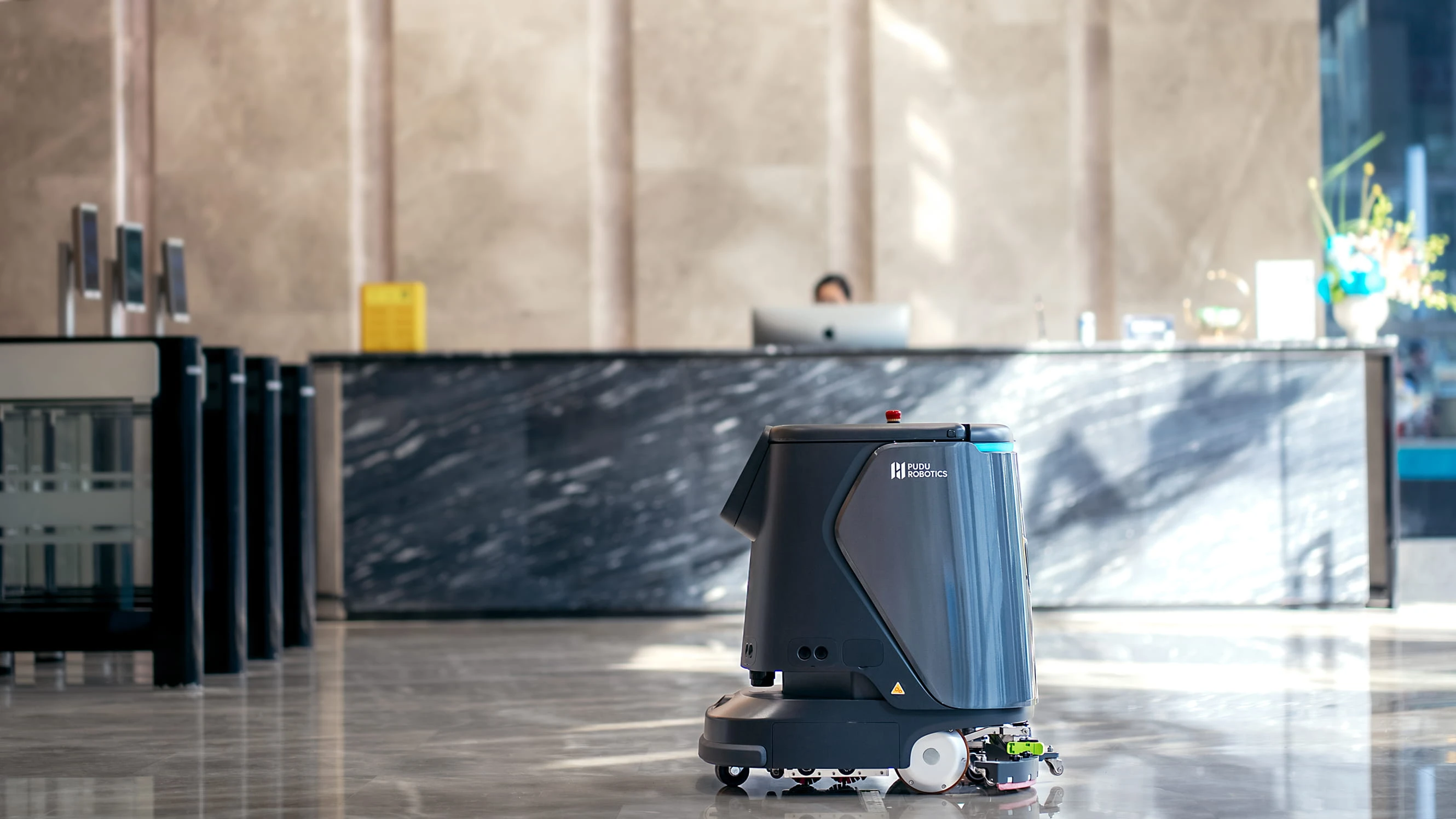
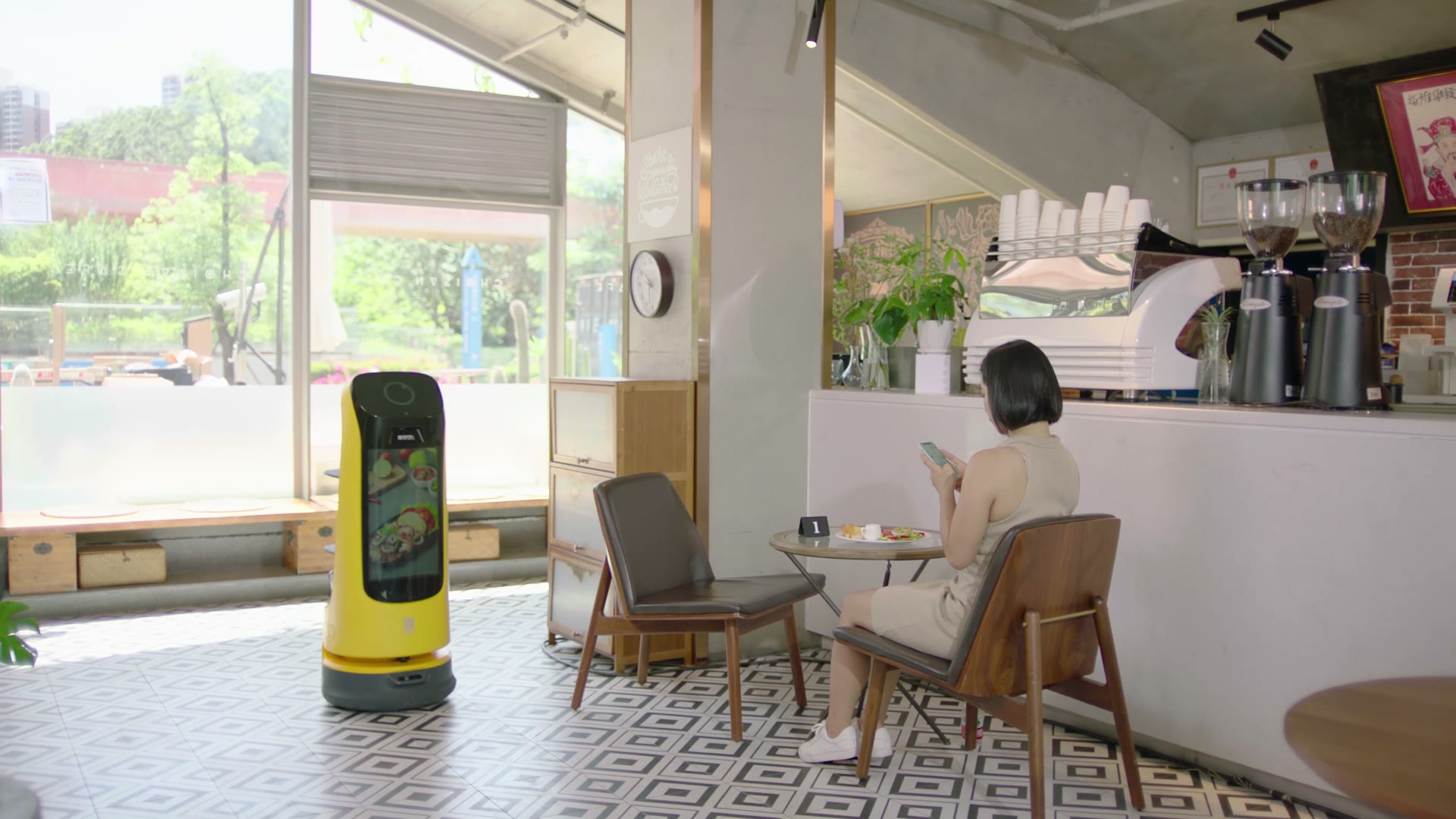
Delivery robots carry plates from the pass to the table and bring dirty dishes back, so servers make fewer trips. Three Pudu models suit different restaurants:
| Robot | Best for | Key specs from its page |
|---|---|---|
| PUDU BellaBot | Food running with personality in full-service dining | Max 40 kg load (10 kg per tray), 13 h battery life (no load), 4.5 h charging |
| PUDU KettyBot Pro | Smaller venues, greeting and advertising plus delivery | 18.5-inch ad display, 10 kg per layer, can pass aisles of about 52 cm |
| PUDU HolaBot | Dish return and high-volume back-of-house runs | 60 kg capacity, 120 L volume, 4 large trays, pager calling |
See all models on our delivery robots page.
What should a restaurant check before buying a kitchen robot?
Menu fit
Wok robots suit stir-fried, sautéed and saucy dishes that follow a repeatable recipe. Beverage dispensers suit menus built on tea bases, syrups, milk and fruit purees. List your top sellers and check which ones the robot can produce to your standard.
Power and space
Check the electrical requirements on the spec sheet against your kitchen. The UTCOOK Chef G2 lists 240 V; the Chef G3U and G3 Lite list 12 kW rated power on three-phase supply; the Zeeway Model K lists 1.2 kW at 220 V 50 Hz or 110 V 60 Hz. Measure the space against the listed dimensions, including room to load ingredients and clean. Talk to your electrician and kitchen designer about ventilation and any building requirements for your site.
Floor plan for delivery robots
Measure the narrowest aisle between tables and compare it with the robot's clearance. Check that the floor is level and that Wi-Fi covers the dining room.
Staff training and workflow
Decide who loads ingredients, who starts recipes and who cleans at close. For delivery robots, decide where plates are loaded and who sends the robot. Robots work best when every shift knows its part.
Support
A kitchen cannot wait a week for a repair. SPARC provides 24-hour online assistance, a guaranteed 48-hour on-site response, an in-house engineering team and genuine parts, with local teams across Canada including the Greater Toronto Area.
How do restaurant robots change the work of your team?
Robots do not replace the people who make a restaurant work. They take the tasks that are repetitive, tiring or easy to get wrong under pressure. UTCOOK describes the benefit of its stir fryers in exactly those terms: by automating essential cooking tasks, the machine reduces manual intervention and frees staff to focus on creative work. In the dining room, delivery robots carry the heavy trays and dish bins so servers can spend more time taking orders, checking on tables and turning them.
The practical result is that a smaller team can hold quality steady during a rush, and an experienced cook's recipe tastes the same on a quiet Tuesday as on a full Saturday night.
How should a restaurant roll out its first robot?
- Start with one station. Choose the wok line, the drink station or food running, whichever is your biggest bottleneck.
- Standardize the recipes first. A robot repeats exactly what it is given, so lock in portions and seasoning before you program it.
- Train a champion on each shift. One person who knows loading, cleaning and simple alerts keeps the robot running.
- Review after a few weeks. Look at ticket times, consistency and staff feedback, then decide whether to add units or another type of robot.
Why restaurants work with SPARC
SPARC Technologies is a verified supplier member of Restaurants Canada and part of Sysco Advantage. In 2024 SPARC received the Restaurants Canada & CCHAC Technology Innovation Award, and it is the official distributor for Pudu in Canada, with more than 1,000 deployments across 35+ industries. We help restaurants choose the right mix of kitchen and dining-room robots, then install, train and support them. Explore our restaurant robotics range or book a demo.